“Rights, We Don’t Have” A Cleaning Woman’s Story

December 5, 2016

It’s not the cleaning work itself that is difficult for Mari and Julissa*, two cleaning women who are contracted to clean a state institution in Honduras. The work is tiring, but both are used to working with their hands.


Mari and Julissa only complain about their salary, just $295 per month, that comes as long as three months late. It’s mid-November, but they haven’t been paid since August.


Julissa is a single mother with two children, 12 and 6 years old. They’re good, smart children, she says, and she wants to make every sacrifice so that they can have the opportunities that she didn’t have. But in stretching this $295 across three months, there’s not enough money to buy the nice clothes she wants to give them or the gifts that they see their friends playing with.


“We can’t buy basic things because we don’t have the money,” says Julissa, who’s not yet 30.


Both Julissa and Mari have had to ask for money from their neighbors and coworkers just to get by. This isn’t money for luxuries.


“It’s to pay the bus fare,” says Mari, “or make rent.”


Other coworkers have suffered even more for the delay in payment. “Those who rent a room, when the end of the month comes and they don’t have the money, the owner kicks them out,” says Mari. “This has happened to a couple of our coworkers.”


It’s stressful for both of them to live on borrowed money, waiting for the day they’ll get paid for their work. They wait so long that even payday isn’t a cause for celebration.


“We pay out debts and go back into debt that first day,” says Julissa, “Day two we have to be borrowing again.”


Mari is 56, and her children are grown, but she still wants to give to help them with their studies or support them in emergencies. Her oldest daughter, she says proudly, is finishing her associate’s degree.


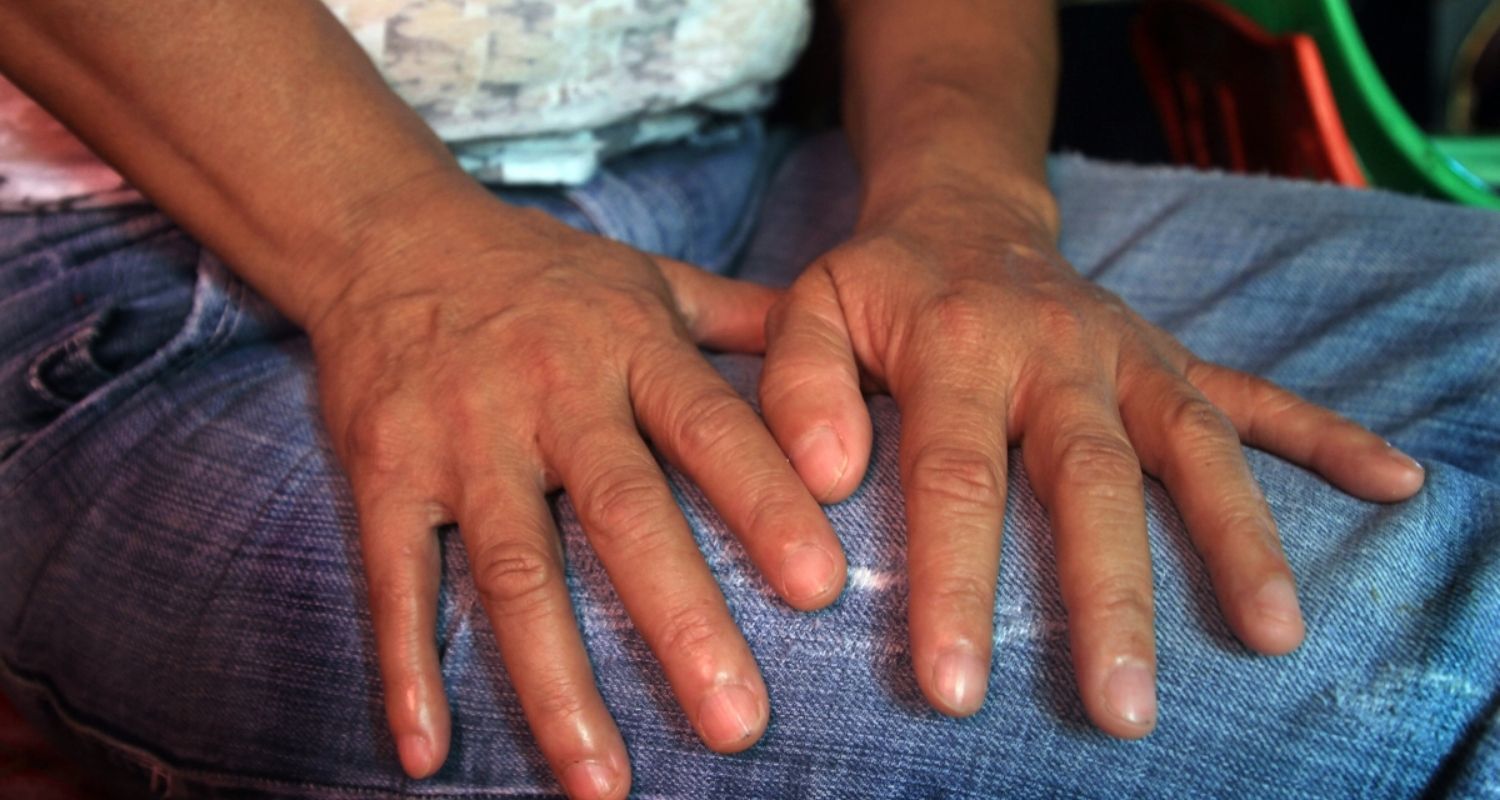
Mari has worked as a cleaning woman her whole life, jumping from contract to contract, and feels that every time she changes companies, her conditions get worse. After six months in this new job, the lateness of the paycheck worries her. But she doesn’t even think of looking for other work. “At my age, no one wants to give me work,” she says, looking down at her hands.


Julissa has been with this company for 14 months. She laughs when asked about her contract.


“It talks about rights, I guess,” she says, “Well, rights, we don’t have.”


“Just our little paycheck,” adds Mari, “and not even that, so much.”


Neither of them has been registered for insurance as required by law, nor do they get vacation days or holidays. If they get sick, Julissa says, “You have to work anyway.”


Last year, Julissa came down with a bad flu. She went to the doctor, who told her to rest for a week. Her job wouldn’t let her stay home, however, and even reduced her paycheck for the day she went to the doctor.


For Mari and Julissa, working with pain, fever, coughing or sneezing has become something normal, expected, but not accepted.


Julissa has a message that she wants to give the companies that contract her and her coworkers.


“If you’re looking for work, it’s because there’s a need,” she says, “We need the money,

and they need us. These businesses are succeeding because of us, and just as they demand good work from us, I hope that they also demand that they pay us on time.”


“We don’t eat every three months,” she says in frustration, “In my house, we eat every day.”

*names changed for security
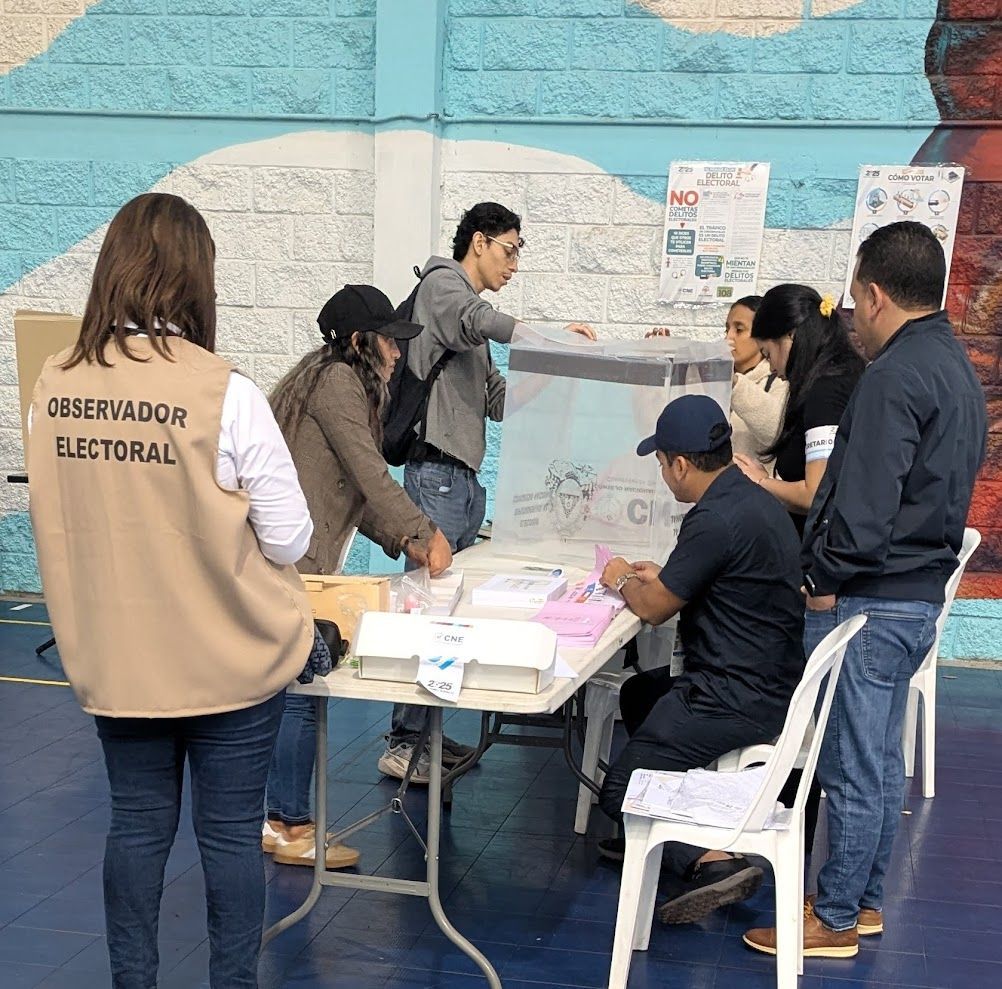
Hondurans cast their ballots during the November 30, 2025, general election, which saw historic vote
By Brian ASJ December 10, 2025
Hondurans cast their ballots during the November 30, 2025, general election, which saw historic voter turnout and a peaceful process supported by more than 12,000 national and international election observers working to safeguard transparency.
By Elizabeth Hickel November 25, 2025
The Association for a More Justice Society-US Supports the Network to Defend Democracy; Calls for Free and Fair Elections in Honduras November 25, 2025
By Elizabeth Hickel November 12, 2025
Dear friend,  I couldn’t stop looking at the picture. Of course, there had been plenty of inspiring photos from this summer’s Prayer Walk for Peace and Democracy. The sea of blue and white rising and falling as hundreds of thousands walked the Honduran hills through Tegucigalpa, flowing like a never-ending stream. Catholic nuns praying their rosaries alongside Pentecostals dancing in the streets. But the picture that still knocks me flat is the closeup. The one of the two men standing side by side (picture enclosed). They are exhausted, and the shorter collapses into the taller. The tears mostly hold joy and relief, but they are mingled with something darker. After all, there had been threats—promises of harm done to themselves and their loved ones if they led their followers through the streets of Honduras in prayer. Despite the fear and intimidation, Pastor Gerardo Irías and Monsignor José Vicente Nácher forged ahead. They knew Honduras needed unity and, above all, prayer before the looming November 2025 presidential elections. As an ASJ supporter, you know that these kinds of threats aren’t out of the ordinary, and your support has helped slow and reverse violence in Honduras. Today, I am writing to share a way you can continue standing with brave Hondurans like Pastor Gerardo and Monsignor José in hope. The Evangelical pastor and the Catholic archbishop put the word out as widely as they could to their churches, hoping to mobilize 20,000 to walk and pray. Instead, an estimated 230,000 walked in the capital of Tegucigalpa alone. It was a historic moment. And without your past support for ASJ, it may have never happened. After all, two years prior, Pastor Gerardo and Monsignor José didn’t even know each other’s names. They first met in 2023 at ASJ’s offices. They were two of many civil society leaders convened by ASJ to discuss safeguarding democracy– especially before the election in 2025. It was at that meeting that they shook each other’s hand and learned each other’s name. It was at that meeting–and many subsequent meetings–where old religious prejudices began to be replaced by trust and mutual affection. So, when the moment came this summer to act, Pastor Gerardo and Monsignor José knew what they had to do. And they knew that they had to do it together.
By Elizabeth Hickel September 2, 2025
Dear Friend, On Saturday, hundreds of thousands of Hondurans flooded their streets with prayer and peaceful demonstration. Reports from our team members who attended said it was like an inspirational sea of people all wanting the same thing for their country: peace. One of our ASJ-US colleagues said he walked past Pentecostals dancing and playing music, a woman praying the rosary, nuns walking, and priests and altar boys in full robes–all walking in the same space together for peace.
By Elizabeth Hickel July 24, 2025
Prayer Update (JUL 16- Election Process Turmoil)
By Alison Wabeke July 7, 2025
Meet the Artist Behind Our New Sticker Illustrations
By Jo Ann Van Engen July 1, 2025
How U.S. Policy Shapes Honduran Families’ Futures  by Jo Ann Van Engen
By Elizabeth Hickel April 29, 2025
Earlier this month, The Banner published a story written by Our Shared Ministr y by Karina Guevara and Elmer Salinas . The authors showcase the work that ASJ-Honduras is doing to help and support students in Honduras. Karina and Elmer tell the story of Genesis Garcia, an 8-year-old, whose family struggles to find consistent jobs. "Genesis Garcia Baquedano is 8 years old and lives with her older brother, Anderson, and their parents in Honduras. Her parents work hard to support their family. Genesis’s father is a painter who struggles to find consistent work, and her mother is a street vendor who spends long hours away from home." According to Karina and Elmer, although Genesis is a good student, she was struggling with reading, writing, and math. This is where the ASJ-Hondurans' program, Strong Communities , comes to be a blessing. "Through God’s grace, Genesis and her family were able to join the Strong Communities program facilitated by World Renew’s local partner, Association for a More Just Society (ASJ, because the Spanish translation is Asociación para una Sociedad más Justa). Through the program, Genesis attended academic support sessions, where she impressed her tutors with her perseverance and enthusiasm. Now, Genesis’s teachers praise the program for the significant progress Genesis has been making at school." We are blessed to be able to help kids like Genesis and her family to be able to achieve their dreams and goals. You can read the full story HERE and learn more about the ASJ-Honduras Strong communities program HERE
By Elizabeth Hickel February 25, 2025
MY EMPTY VILLAGE / HOW IMMIGRATION AFFECTS A COMMUNITY (by Sara Pineda)
By Elizabeth Hickel February 25, 2025
Young Hondurans have stepped up for democracy (by Blanca Stephanie Elvir)
Show More